English
 Arabic
 French
 German
 Indonesian


English
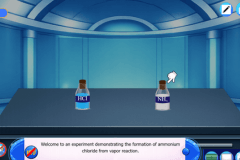
Test Your Knowledge:1. What do you expect to happen when ammonia vapor is brought close to hydrogen......
M17: Acids and Bases
Test Your Knowledge:1. What do you expect to happen when ammonia vapor is brought close to hydrogen chloride vapor?2. Can a reaction between two gases produce a solid substance? Explain your prediction.3. What might the appearance of a white cloud indicate when the vapors mix?Scientific Explanation:......
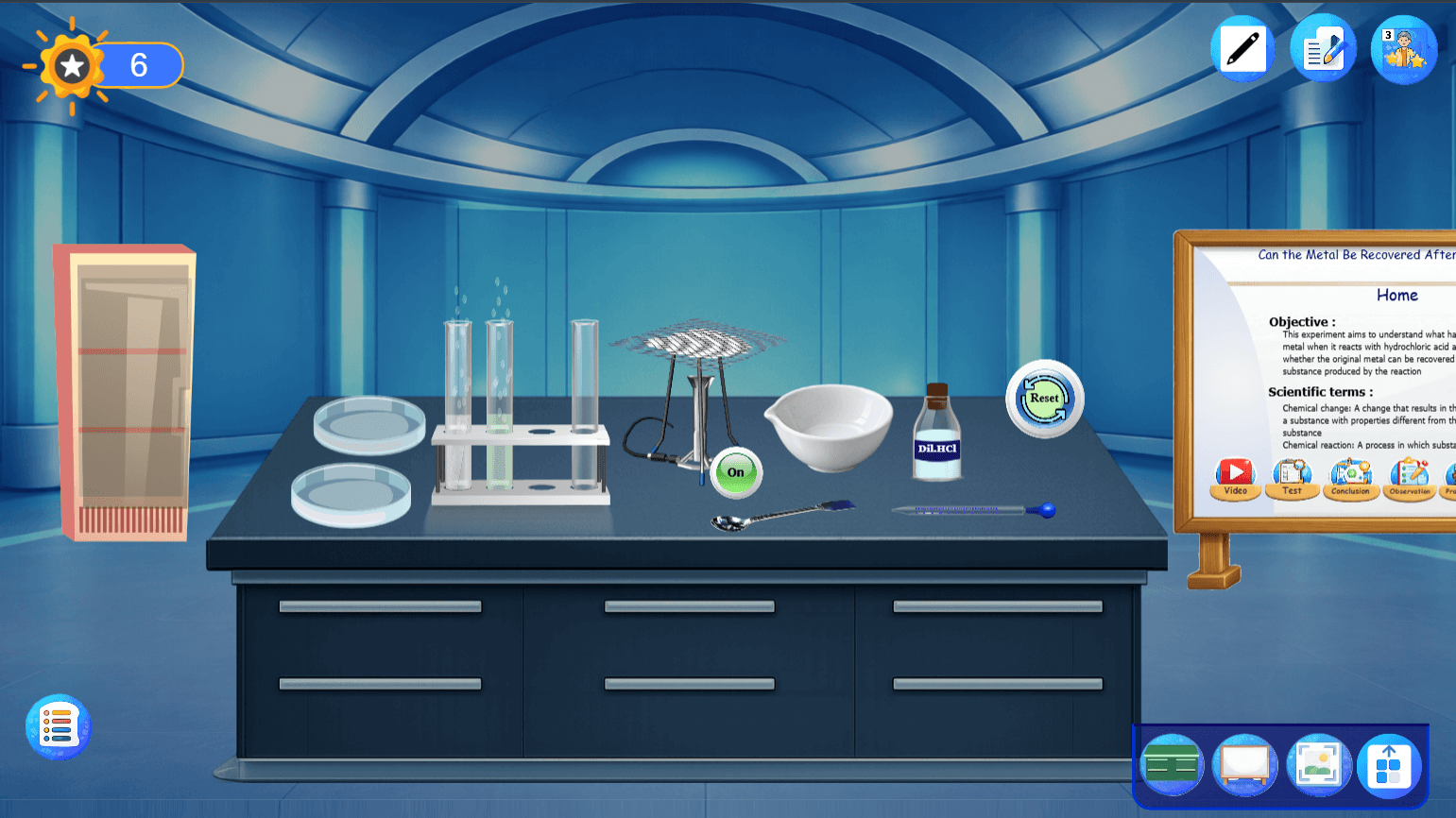
Test Your Knowledge:1. What do you expect to happen when hydrochloric acid is added to a piece of al......
Science
Test Your Knowledge:1. What do you expect to happen when hydrochloric acid is added to a piece of aluminum or iron?2. If a metal piece gradually disappears during a reaction, does this mean it has completely vanished, or has it changed into another substance?3. Do you expect the solid material remai......
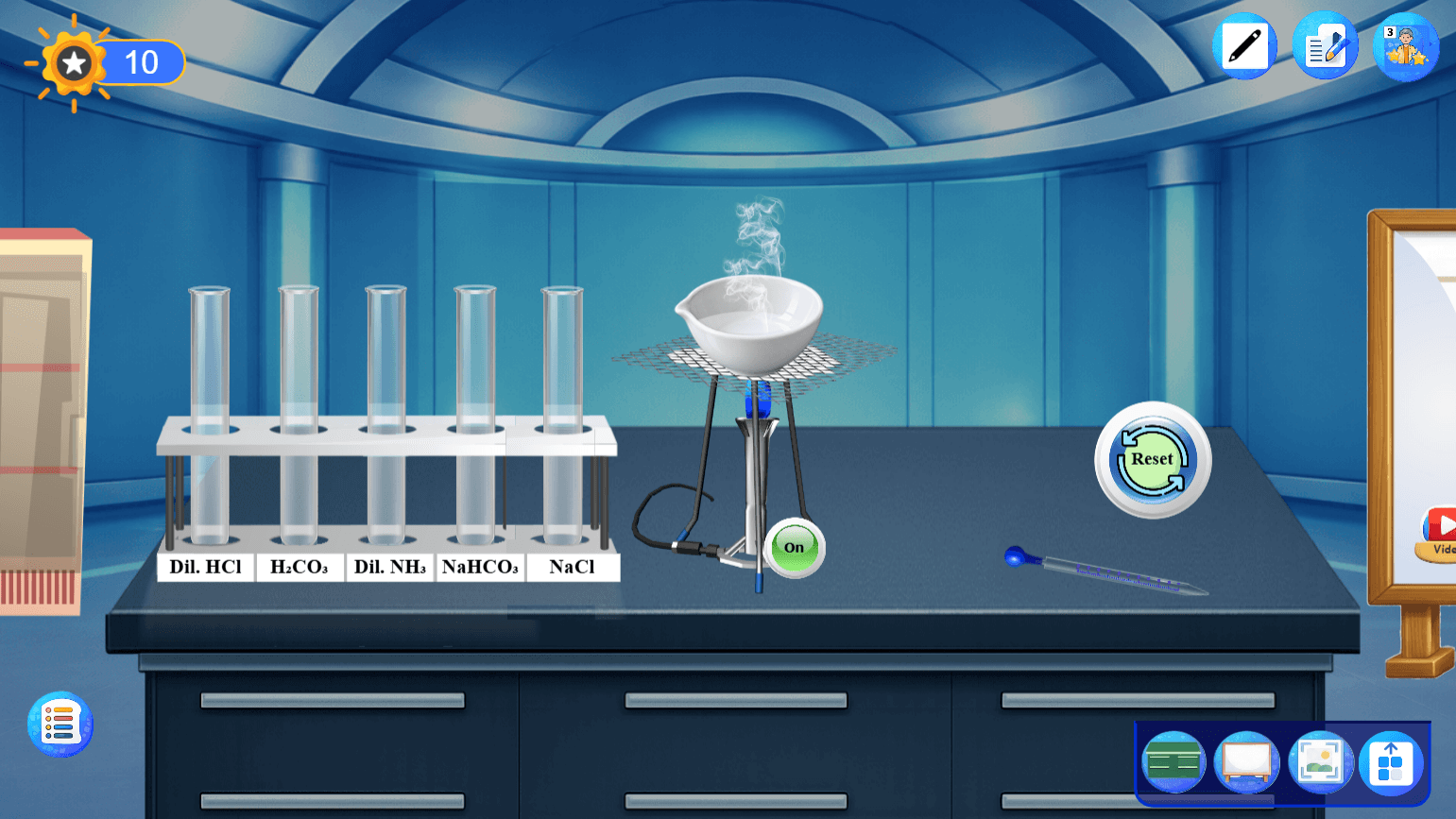
Objective:Identify the state of the dissolved substance in a solution by heating it and evaporating......
Science
Objective:Identify the state of the dissolved substance in a solution by heating it and evaporating the solvent, then observing the remaining substance.Materials:Test tubes – Solutions: salt water, sparkling water, dilute hydrochloric acid, baking soda solution, dilute ammonia solution – Evaporating......
Objective:Detect the carbon dioxide gas produced by burning the candle using clear limewater.Materia......
Science
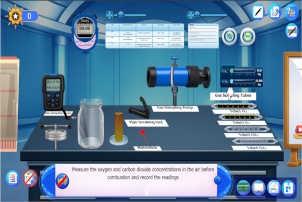
Objective:Detect the carbon dioxide gas produced by burning the candle using clear limewater.Materials:Two glass containers – Two lids – Candle – Candle holder – Clear limewater – Safety goggles – LighterProcedure:Place equal amounts of clear limewater in the two glass containers Place the candle on......
Objective:Identify the effect of different gases on the combustion process and compare the effect of......
Science
Objective:Identify the effect of different gases on the combustion process and compare the effect of each gas on the candle flame.Materials:Glass trough – Glass gas collection jar – Oxygen gas cylinder – Nitrogen gas cylinder – Carbon dioxide gas cylinder – Glass cover – Candle – Matchstick – Long h......
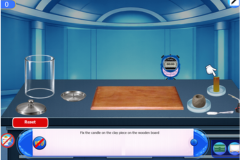
Objective:Demonstrate the importance of air entering and hot gases leaving in maintaining the combus......
Science
Objective:Demonstrate the importance of air entering and hot gases leaving in maintaining the combustion process.Materials:Candle – Piece of clay – Metal cover – Bottomless glass container – Candle holder – Wooden board – LighterProcedure:Secure the candle on the piece of clay placed on the wooden b......
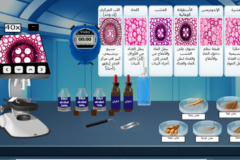
Objective:Identify different types of roots and examine the internal structure of a taproot using a......
Science
Objective:Identify different types of roots and examine the internal structure of a taproot using a cross-section and a microscope.Materials:Samples of different types of roots – Magnifying glass – Razor blade – Dissecting needle – Glass slide – Dropper – Distilled water – Safranin stain – Ethyl alc......
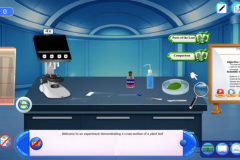
Objective:Examine and study the internal structure of the leaf and identify its different layers and......
Module A | Cells
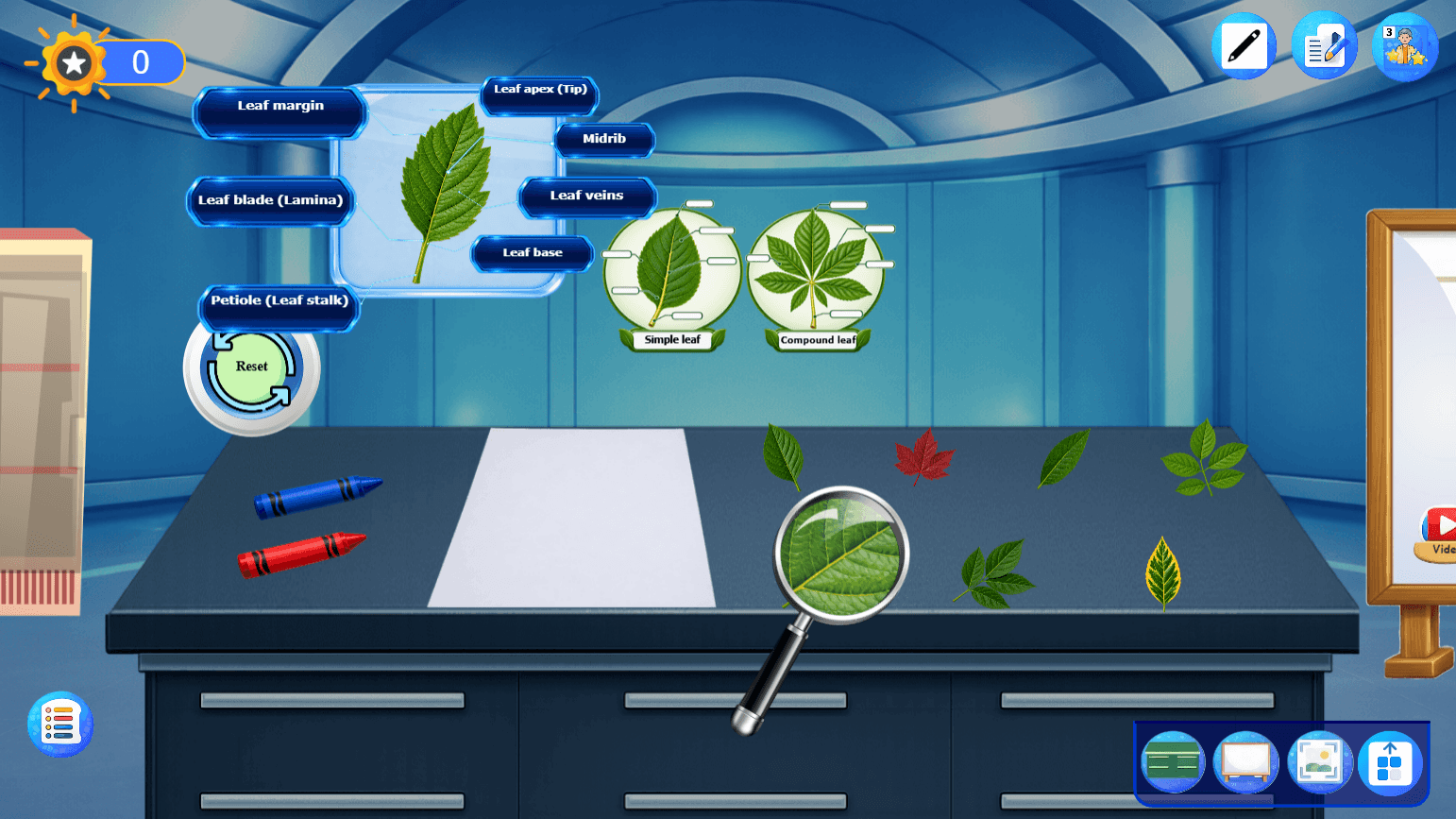
Objective:Examine and study the internal structure of the leaf and identify its different layers and tissues under a microscope.Materials:Green plant leaf – Scalpel – Glass slide – Dropper – Distilled water – Safranin stain – Coverslip – Microscope – Magnifying glassProcedure:Place the leaf under th......
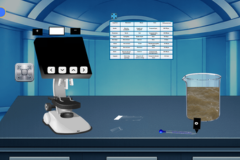
Unit 1 | Cells and Living Systems
Examining Microorganisms in a Water Sample
Unit 1 | Cells and Living Systems
Examining Microorganisms in a Water Sample
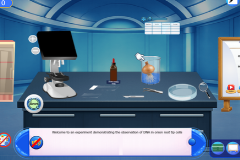
Unit 2 | Growth, Repair, and Reproduction
An interactive experiment demonstrating how to observe DNA in onion root tip cells. The experiment i......
Unit 2 | Growth, Repair, and Reproduction
An interactive experiment demonstrating how to observe DNA in onion root tip cells. The experiment involves cutting a small part of the root tip, preparing and staining it with acetocarmine, examining the sample under a microscope at different magnifications, and counting the visible cells and the c......
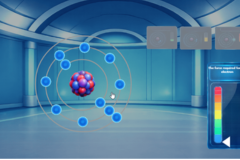
Unit 1 | Atoms and the Periodic Table
Relationship Between Electron Energy and Its Position in the Atom
Unit 1 | Atoms and the Periodic Table
Relationship Between Electron Energy and Its Position in the Atom
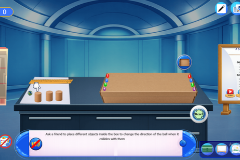
Unit 1 | Atoms and the Periodic Table
A simplified simulation of Rutherford’s experiment showing how hidden objects can be inferred by obs......
Unit 1 | Atoms and the Periodic Table
A simplified simulation of Rutherford’s experiment showing how hidden objects can be inferred by observing the paths and deflections of balls when they collide with them, similar to Rutherford’s inference of a small, dense nucleus inside the atom from the deflection of alpha particles.Rutherford Exp......
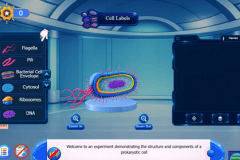
An Experiment Illustrating the Structure and Components of a Prokaryotic Cell.
biology
An Experiment Illustrating the Structure and Components of a Prokaryotic Cell.
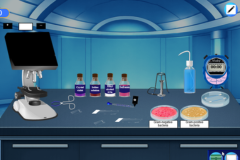
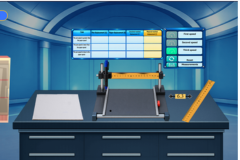
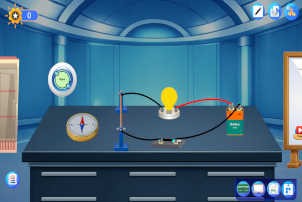
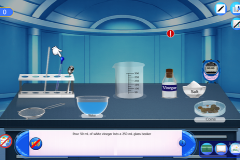
This experiment demonstrates how copper oxide reacts with acetic acid in white vinegar in the presen......
This experiment demonstrates how copper oxide reacts with acetic acid in white vinegar in the presence of table salt, helping remove the dull layer from copper coins and restore their shine. Learners explore chemical reactions and the role of ions in cleaning metal surfaces.Keywords: Copper Oxide, W......

© All Rights Reserved @ 2026 For VLaby - Powered By VLaby.