 English
 Arabic
 French
 German
 Indonesian


English
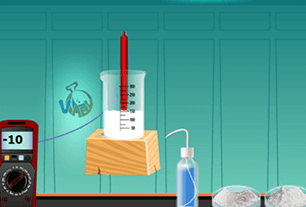
Endothermic reactionsKeywords (English): endothermic reactions – energy absorption – thermal change
Chemistry
Endothermic reactionsKeywords (English): endothermic reactions – energy absorption – thermal change
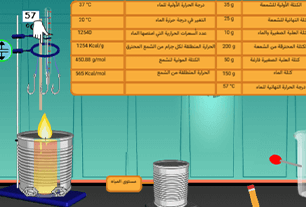
the goal:Measuring the change in temperature of a mass of water during a combustion reaction.Materia......
Chemistry
the goal:Measuring the change in temperature of a mass of water during a combustion reaction.Materials and tools:Candle - Small metal box - Large open-ended metal box - Steel wool - Balance - Pen - Stirring rod - ThermometerSteps:1. Light the candle and weigh the large container.2. Fill the containe......
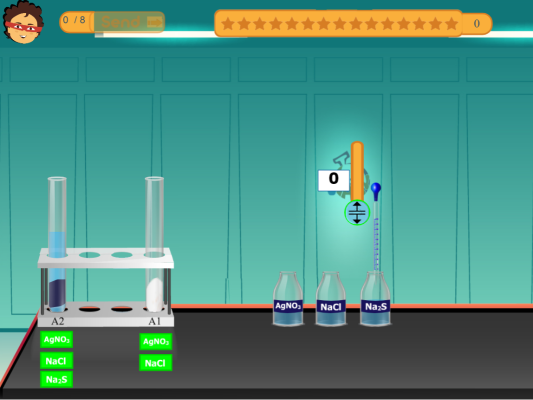
Keywords: Solubility product – Sparingly soluble salts – Equilibrium – Solutions – Comparison
Chemistry
Keywords: Solubility product – Sparingly soluble salts – Equilibrium – Solutions – Comparison
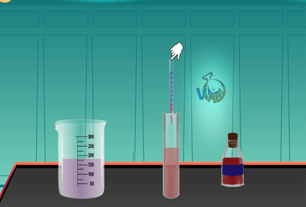
Keywords: Equilibrium – Equal forces – Rest – Uniform motion
Chemistry
Keywords: Equilibrium – Equal forces – Rest – Uniform motion
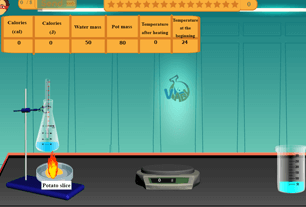
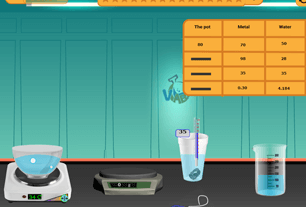
Keywords: Specific heat – Thermal energy – Mass – Temperature
Chemistry
Keywords: Specific heat – Thermal energy – Mass – Temperature
Keywords: Cold materials – Heat transfer – Absorption – Temperature
Chemistry
Keywords: Cold materials – Heat transfer – Absorption – Temperature
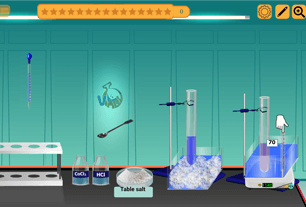
This experiment demonstrates the effect of concentration and temperature on the equilibrium between......
Chemistry
This experiment demonstrates the effect of concentration and temperature on the equilibrium between the pink and blue cobalt chloride complexes.Keywords: Equilibrium – Forces – Motion – Position – Physics
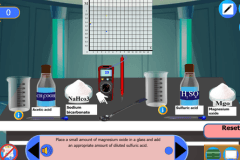
Objective: To identify the difference between exothermic and endothermic reactions. Materials: Glass......
Chemistry
Objective: To identify the difference between exothermic and endothermic reactions. Materials: Glass beaker, teaspoon, thermometer, water, magnesium oxide (MgO), sulfuric acid (H₂SO₄), baking soda (NaHCO₃), vinegar (CH₃COOH).Procedure:Place a small amount of magnesium oxide in a glass beaker.Add an......
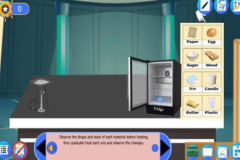
Objective: To distinguish between reversible and irreversible reactions.Materials: Candle – white pa......
Investigate Matter
Objective: To distinguish between reversible and irreversible reactions.Materials: Candle – white paper – egg – ice cubes – sugar – butter – heat source – heat-resistant container – tongs.Procedure: Observe each material before heating. Heat each material gradually and record the changes. Cool each......
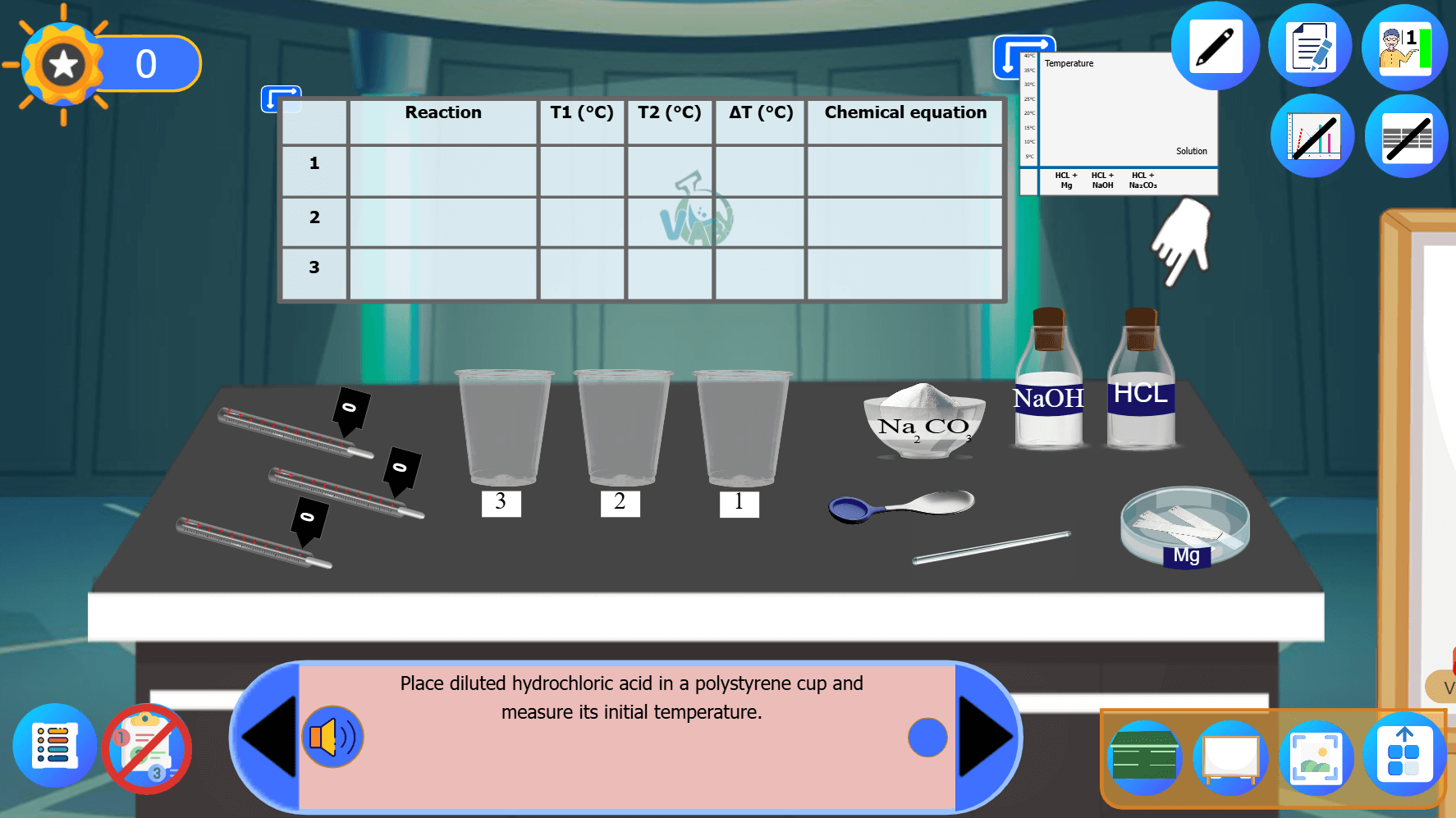
Objective: To prove that some chemical reactions are accompanied by the release of thermal energy, w......
Science
Objective: To prove that some chemical reactions are accompanied by the release of thermal energy, which leads to an increase in the temperature of the surrounding medium.Materials: Dilute hydrochloric acid – Magnesium ribbon – Sodium hydroxide solution – Sodium carbonate – Polystyrene cups – Glass......
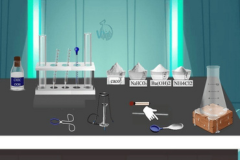
Objective: To identify chemical reactions that absorb thermal energy from the surroundings, leading......
Science
Objective: To identify chemical reactions that absorb thermal energy from the surroundings, leading to a decrease in temperature.Tools: Barium hydroxide - Ammonium chloride - Sodium bicarbonate - Dilute acid - Calcium carbonate - Glass flask - Insulated cup - Thermometer - Heat sourceSteps: Barium h......
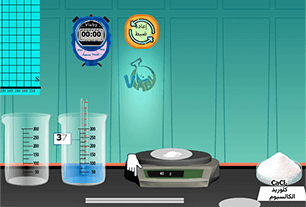
the goal:Explanation of thermal energy transformations.Materials and tools:Magnesium sulfate - Calci......
Using Energy
the goal:Explanation of thermal energy transformations.Materials and tools:Magnesium sulfate - Calcium chloride - Distilled water - Glass beaker - Thermometer - Scale - Glass pipette - Spoon.Steps:1- Fill the glass beaker with 100 ml of water and record the temperature using the thermometer.2- Weigh......
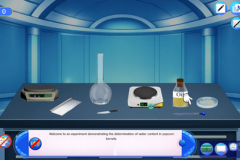
Objective: To determine the water content in popcorn kernels by measuring mass before and after heat......
Chemistry
Objective: To determine the water content in popcorn kernels by measuring mass before and after heating.Materials: Glass beaker _ 20 popcorn kernels _ 5 mL cooking oil _ aluminum foil _ electronic balance _ stove or hot plateProcedure: Add 5 mL of cooking oil to a clean glass beaker. Measure the mas......
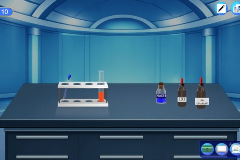
Objective:To identify the neutralization reaction between an acid and an alkali using a universal in......
Science
Objective:To identify the neutralization reaction between an acid and an alkali using a universal indicatorMaterials:Test tubes – Dropper – Dilute sodium hydroxide solution NaOH – Dilute hydrochloric acid HCl – Universal indicatorProcedure:Place 1 mL of dilute sodium hydroxide solution into a test t......
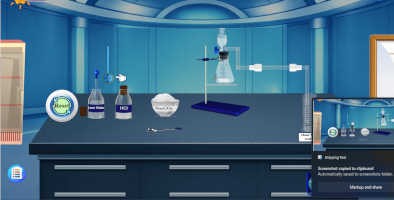
This experiment aims to study the reaction of a strong acid with a salt of a weak acid and identify......
Science
This experiment aims to study the reaction of a strong acid with a salt of a weak acid and identify the products formed.

© All Rights Reserved @ 2026 For VLaby - Powered By VLaby.